Showing posts with label Explorer of the month. Show all posts

Wednesday, June 1, 2016

Woman of the World (and explantions for my hiatus)

Holy CRAP! I hate Grad School. Today was my last full class, I have my "Exit Interview" tomorrow and then I am freaking done. Like waaaay more done than I am with this beer next to me. Anyway....rough couple of semesters....blah blah blah....that means I now I have time to write more! I am going to start this off by cheating. By cheating, I mean posting something I didn't write. But I did ask the author to write it for my blog (because she posts less often than I do). So there, take that.

Let me introduce the author of this post, her name is Sara. I call her Honeybee. Not because its a cute pet name or anything. Because we met as counselors at a Nature Camp and we had to have Nature names. Don't ask me why. There was Bison, and Hedgehog and Blue Jay and Sprout and Honeybee....which one was me I hear you asking? None of them. I was Cockroach. Anyways, I have known Sara since she was like 16 and have seen her grow up to be a strong willed and adventurous young woman. She has spent the last while in Asia, traveling and teaching and generally being herself. I have no doubt that some of that time was spent trying to tame her hair, but to no avail. Sorry Sara, I couldn't help it. My most popular blog post ever was one I wrote about Women in Adventuring/Exploration and I wanted to follow that up with one that I know personally. Thanks Sara, for your input and for being someone that not only young girls/boys can aspire to be, but also because you inspire me. Because you're awesome. And I'm super jealous.

Love and Disaster in East Asia: 10 Lessons I Learned the Hard Way

Hi! My name is Sara and this is me.  I’m a directionless 23-year-old college grad who stumbled upon an opportunity to work and travel in Asia.  I have had great times and I have had terrible times, but most of the time, I am just trying to keep moving forward.  Thanks to Logan, I get to share some of my greatest successes (and a few epic fails) with you.  These are the 10 most important lessons, some of which I had to learn the hard way.

  1. IMG_20160222_145521[1].jpg
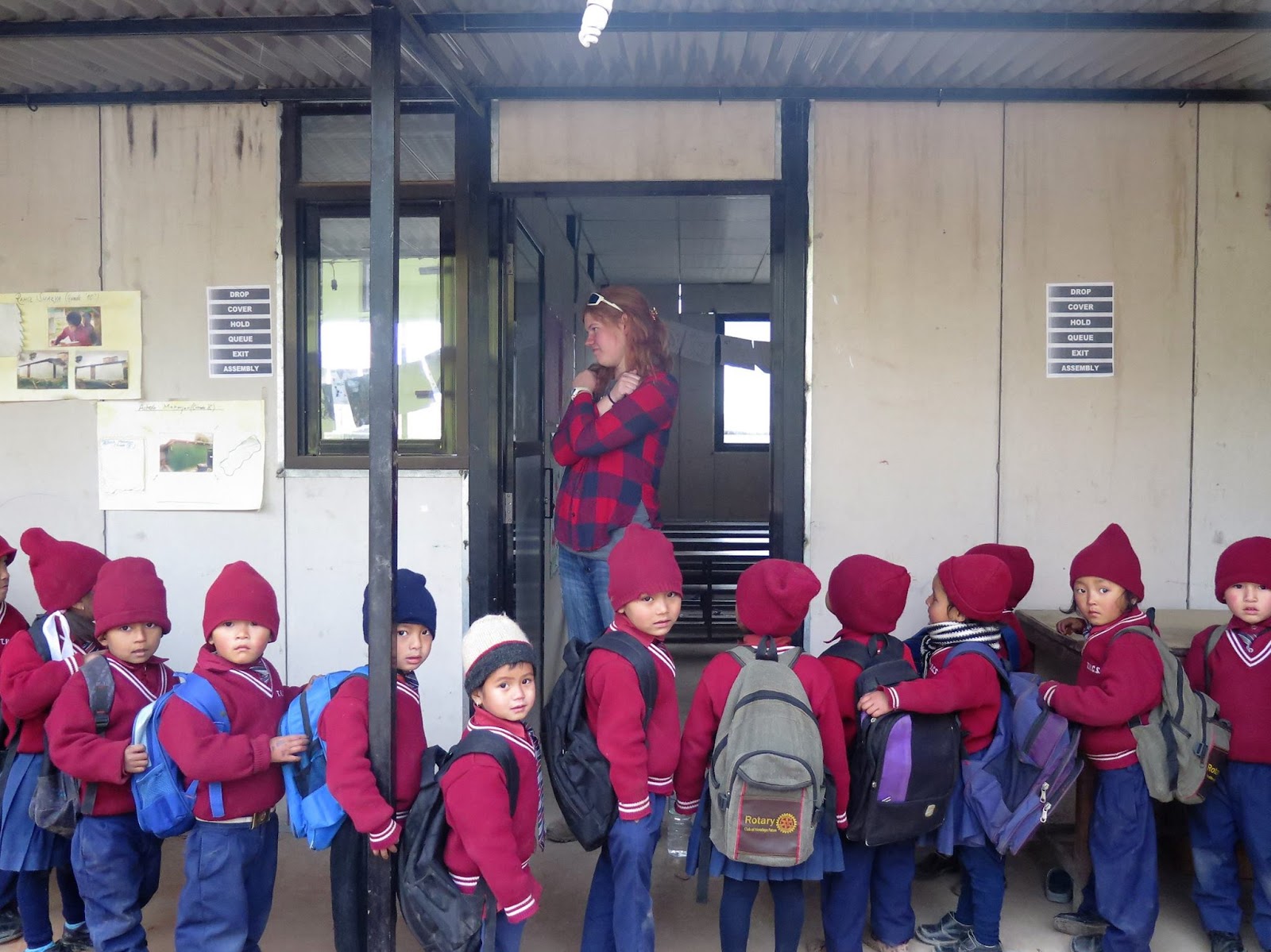
    If you are a native English speaker, count your blessings. No matter where I was, I was able to find at least 1 person with rudimentary English. I could buy what I needed and find my way when I got lost. In a farming village in east Nepal, I was even able to learn a handful of words and phrases in Nepali.  As an English teacher in China, I understand the popularity of the English language, but it wasn’t until Nepal that I really experienced how hungry people were for it.  A business that has the most rudimentary grasp of English has a huge advantage over one that doesn’t.
  2. Always do something that scares you. You might end up loving it. I went paragliding in Pokhara, Nepal. Me. Terrified of heights and, more specifically, falling from great heights. With nothing but a harness and glorified piece of fabric keeping me in the air (and also a pilot named Sabine to whom I entrusted my life). Despite the fog and smog, my view of the AnnaPurna range from 2000 m up was...surreal. There are only a few times in your life when you feel like you are finally big enough to stand out and face the universe in all of its vastness. In that moment, you realize just how small your footsteps are. You feel the thin threads of silky time tying you precariously to your present. You come face to face with your relative insignificance and it is the most liberating moment. You finally feel free enough to take the big risks that our collectively massive existence requires for growth.
CAM00652[1].jpg
  1. Pick up some local customs. In Nepal, the head movement for “yes” is bobbing your head from side-to-side instead of the western up-and-down.  The one-nod “hello” is universal, but you can also touch your hand to your heart or to your forehead (the third eye) instead of putting your hands in the prayer position when you say “Namaste” to someone. It’s these little things that make people treat you with a little more respect and less like a tourist.
  2. Don’t Panic. Ok, I’m borrowing this one from Douglas Adams Hitchhiker’s Guide to the Galaxy, but it’s true. There is a story I like to remember and it helped me through getting pickpocketed of all my money and important documents, on several small and cramped buses, and in long and confusing customs procedures.
A king once commanded his advisors to create something that would help him get through everything in his life. The highest of highs, the lowest of lows, this thing needed to be there to keep him grounded. After several months of debating, the advisors finally came to king. They presented him with a small gold ring with an inscription on the inside that read “This too shall pass.” Nepal has a similar motto: “We can manage.”  Both of these sayings serve as a reminder that our time is remarkably short and that happiness and success is something we create rather than happen upon. Freaking out in the middle of a crisis will not help anyone, especially you.  After the crisis is over, feel free to panic and cry. Personally, I recommended bad wine, good food, and great friends.
  1. I mentioned this briefly in the last lesson, but it needs it’s own section. Happiness and Success are things that we create, not find. On my travels, I met with a professional chef, several students, a virology lab tech, a few engineers, dozens and dozens of volunteers with varying backstories, international hospitality staff on seminars, managers and consultants of everything under the sun, and so many others who I didn’t have time to really know.  Many of these people were not Americans (which was an eye-opener for me in and of itself) and they were influenced differently to believe in more flexible measures of success. So often in Western culture (and particularly in the US), the daily grind lives up to its name because it only offers us 1 scale for success: the almighty dollar.  The backpackers and vacationers and workers I met did not share the same view. One night, in my hostel room, we held a yoga class led by a Chinese woman who had been practicing for only a year.  Between the laughs, falls, and broken English, we came to value this woman’s dedication, rewarding her with our thanks and respect.  For her, it was enough to simply share and communicate with us something that she considered important.
While travelling, your fellow bunkmates value you as much as you value yourself. If you think that your experiences are worthwhile and you gather the courage to share them, they will listen and discuss and inquire.  You have to create your own definition of success, see yourself as happy, and others will do the same.

  1. Research the things that are considered to be “Western luxuries” before you “go”. I mean this both figuratively and literally. Figuratively: In many places, even tourist towns like Bangkok and Siem Reap, free WiFi, hot water, electricity, and blankets may be hard to find. Literally: You want to know what else is hard to find? Tampons and toilet paper. See what I did there?
  2. It’s OK to relax.  You might be thinking, “But I’m on vacation, how much more relaxed can I get?”. Imagine you only have 2 weeks in an area that is famous for its temples and palaces and beaches and sights.  Of course you want to go see everything, so your day might look like this:

8:00
Breakfast
9:30
Great Wall at Mutianyu
12:00
Lunch
1:30
Summer Palace
4:00
Tiananmen Square
4:45
Wangfujing
5:15
Beijing Duck Dinner
8:30
Acrobatics Show and Fireworks
10:30
Bed

This. Is. Exhausting. And the next day isn’t any better because there are 4 more temples and 2 ancient markets to get to.  And pretty soon, “vacation” becomes “dragging your sore and sorry ass from one sight to the next”.  It all looks the same.  Nothing is exciting any more.  The only thing you can really hope for is that your fake smiles and clever hashtags get you a few more followers on Instagram to make up for your current fatigue.  Take a break.  Watch movies. Fight jetlag. Go to a coffee shop and sit there for 3 hours ordering cloyingly sweet lattes, the true flavor of victory in an Eastern tea-centric culture.  I promise, the temples will be there tomorrow.
On a completely unrelated note: Whoops! My bad! Sorry, Mom and Dad! #hangry
IMG_20160224_205813[1].jpg
  1. This is less of traveler’s lesson and more of a life lesson: Never try to out-drink an Australian. You will lose. Badly. I had the lake-soaked dress clothes and rolled ankle prove it.
  2. Take carry-on baggage only. Most of the time, airport security won’t lose your stuff.  Most of the time, if the small, low-cost airline won’t transfer your bags for you, you will have enough time to get your bags and re-check in.  But it is a huge relief that, when things do go wrong (I’m looking at you, Calcutta airport), you don’t have to hold up the plane even longer because you have to go and get a checked bag.  You can wash your clothes in any country you are in, either by hand or paid service.  You can buy any liquid toiletries anywhere including, to my delight and surprise, contact solution. You can leave your L’Oreal at home because travelers all look the same: worn and weary.  It’s a very noble look, even if the smell is a little funny.
OK, brief story about Calcutta: so basically you need an Indian visa to fly through this airport which, if you think about it, is really stupid.  Why would I need a visa to a country I don’t even want to enter?  I just wanted to pass through.  So after 30 minutes of being directed to 4 different visa lines, some older boss lady comes up and starts yelling “Where were you?”, “You are late!”, and “I was waiting for you!”.  I’m just standing there thinking, please, just take my passport and give me my plane ticket. I just want to leave. So she takes my passport and credit card info and e-ticket and walks away for another 40 minutes.  Then a different guy shows up with all of my documents and we walk in a short circle like he’s confused on where to go.  They call a guard who escorts us to a closed section of the airport where I get my own VIP security procedure.  They rush me to the gate and I finally manage to get on the plane just as it’s supposed to leave.  It would have been funny if I wasn’t so worried about missing my plane.
  1. Keep a journal. I would not have been able to write this if I hadn’t kept mine.  There are so many little things you forget when you are completely overwhelmed by the new sounds and smells.  The leaf-gold temples standing high above the city burn brightly in your memory and almost make you forget sipping your first Thai iced tea while watching the sun set over the river.The colossal majesty of Angkor Wat eclipses the innocent humor of a little girl riding to school on a bicycle that is much too big for her. The name of our resident elephant in Chitwan National Park (Pumaya), the Irish Red Cross volunteer leaping up to join the Tharu cultural dance program, making milk tea in a little farming co-op with Muna and her boys, Mohit and Marbin. My journal honors my time in these sacred places by providing me with the space to store those memories.  It honors the people I lived with, traveled with, or just talked with for teaching me something new about the world.  It lets me continue learning from these people long after they’ve gone by reading through the pen-captured conversations I can only barely recall. And best, it provides a teaching guide so that I can share the lessons I’ve learned with my family, my friends, and other adventurers seeking to start a journey of their own.
Friday, February 5, 2016

Beyond the Mountains of Madness, or a Salute to a lost Adventurer


I know this is late, but I have been thinking about how to approach this topic for awhile now. I want to fore warn you that I did not personally know the individual that will be the subject of this post. I do not know his views, nor his family's. These are purely my musings and are not meant to represent anyone or anything but myself.

On January 24, 2016, only seven days ago (at the time of me writing this), the world lost an Adventurer. His name was Henry Worsley. He was an ex-British Army officer and had made a goal of hiking from one end of Antarctica to the other. A lofty goal, indeed. Unfortunately, only 30 miles from the end of his journey, he had to call in for back up. He was tossing in the flag. Not long later, he would be pronounced dead from total organ failure.

Often, when we think of the word "adventurer", we think of Indian Jones, Lara Croft or Nathan Drake (my personal favorite). However, in the real world, adventurers don't normally find themselves fighting Nazis for the Holy Grail, Escaping a cult on a lost island, or fighting a war criminal for eternal life. Here, in reality, they are men and women who choose to take on daring feats, often enduring extensive journeys by boat, balloon or foot. Sometimes they travel horizontally and sometimes vertically. They travel through mountains, jungles, deserts and the sky. Mr. Worsley chose the desolate land of ice and snow that is Antarctica.


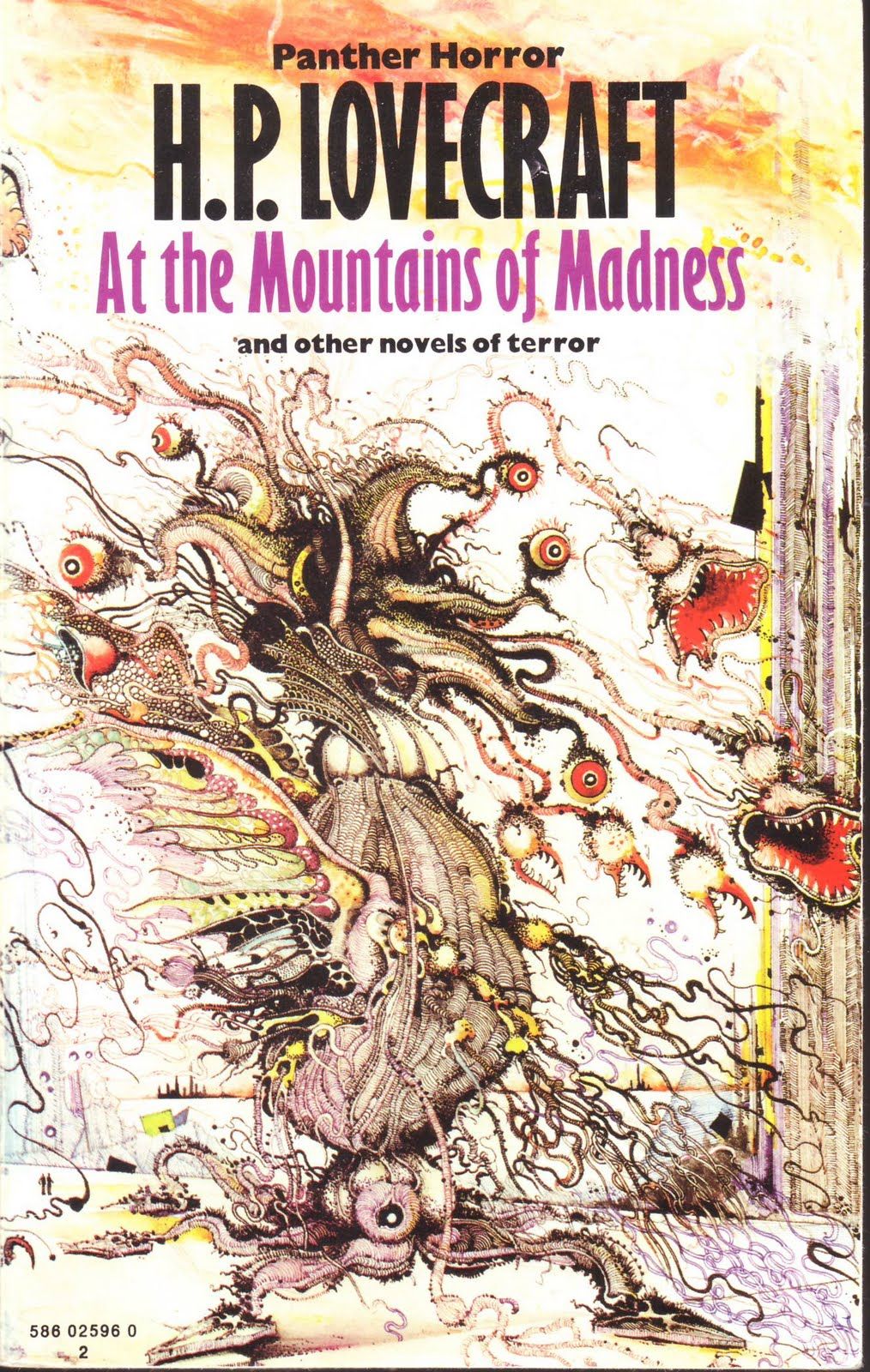
Admittedly, I know little of Antarctica. After all, my imagination runs through the desert more often than not. My first real foray into the continent came from the novella "At the Mountains of Madness" by H. P.  Lovecraft. In the story, a group of explorers from Miskatonic University find themselves lost and pursued through a system of super-ancient corridors and tunnels built by intelligent beings from beyond Space and Time. Aside from the lurking fear (another Lovecraft story), the blistering winds, frigid temperatures and utter desolation plague the misguided heroes. Despite the science fiction, Lovecraft evoked a real sense of awe when describing the southern fringe of the globe. Antarctica has always carried with a it a sense of mystery and wonder. He would not be the only author to suppose what lie beneath the sheets of ice. In all honesty, I can only imagine that a similar since of awe and wonder for the continent is what sent Mr. Worsley there in the first place. I don't feel like that's too much of a stretch.

Mr. Worsley was an admirer of Sir Ernest Shackleton, the most famous of Antarctic explorers. Sir Shackleton, born in 1822 was an accomplished explorer and adventure by any definition. His sailing and overland expeditions were most often focused on Antarctica. On January 5, 1922, Shackleton himself died on an expedition in Antarctica.

Henry Worsley was using this expedition to raise funds for injured soldiers, an admirable cause, but it was not just about the charity for him. Adventure was the main draw. The task was to travel Antarctica, coast to coast, completely unaided. A daunting task to be sure. But one that Worsley tackled head on. He made it 70 days before he called for help. All in all, traveling 913 miles (1,469 KM for the rest of you) before feeling as though he needed to throw in the towel. Even then, he has been quoted with saying, "I will lick my wounds, they will heal over time and I will come to terms with the disappointment." A man seemingly as undaunted as the continent he sough to conquer. After calling for help, he was airlifted on the 23rd of January to a hospital in Chile. There, while undergoing surgery, he would die of total organ failure.

This is undoubtedly a time of grieving and mourning for the family and friends of the 71 year old adventurer. I can't help but be a little sad myself. It seems to me that the sense of wonder with the world and determination that it takes to tackle adventures like this are growing rarer and rarer. With technology, it is easy to think of the world as a smaller place. A place where everything is written down and photographed and put on Wikipedia for the world to see. This is nowhere near the truth, but the message permeates our culture. All that being said, this is a salute to Mr. Worsley. Wherever you are. You dared to dream during the day, as T. E. Lawrence said, and while you did not make your goal, it was in no way a failure. Few can truly say they died doing what they loved.You are inspiration to me, and I am sure to many others as well.
From: http://www.thetimes.co.uk/tto/multimedia/archive/01050/fc24386a-c454-11e5_1050832b.jpg

http://www.bbc.com/news/uk-35398552

Sunday, March 31, 2013

Explorer of the Month: Fish Tales

     So I have been itching for spring to get here so it can finally warm up and I can start fishing. In honor of the arrival of my excitement for fishing I am nominating my favorite fisherman for Explorer of the Month. Fishing isn't usually the first thing that pops into mind when one thinks of exploring. I admit that it wasn't on my radar either until one man convinced me. His name is Jeremy Wade, host of the Animal Planet program River Monsters. Mr. Wade is a biologist by trade, but is also a renown "extreme angler". On his TV show he travels the world in search of over sized fish that may explain local legends and lore about man eating monsters in the the world's river systems. It is not only the travel to exotic, or some times rather mundane locales that makes him an explorer. Just by viewing the show, one can tell that Wade has the utmost interest in not only his quarry, but the stories and people involved.
     One of the most intriguing episodes takes place in Africa where he is fishing for the Goliath Tiger Fish. During this particular adventure, he becomes involved with a local tribe, learns about fishing gangs, hears a story about marauding hippos and handles some of mankind's very first fishing implements. If that does scream exploring, I don't know what does.
    Recently, I had the joy of reading his book "River Monsters: True Stories of the Ones that Didn't get Away". While at first glance, the book appears to simply be a rehash of the first couple seasons of the show. However, the stories he tells are filled with interesting asides and misadventures that Mr. Wade has gone through from his time as a young hopeful obsessed with fishing to the man he is today. We are talking plane crashes, encounters with Natives, and being arrested for espionage. These are things, that while mentioned on the show, are retold in great detail that makes the book interesting on many levels.
     It obvious from the words on the pages that Jeremy Wade had a deep caring for the these giants "monsters" and greatly laments that they are disappearing from the planet and that he may in fact be one of the last people to witness some of these giants. Jeremy Wade is a man, while I do not know him personally, that I look up to. His genuine interest in the world around him and the people within it alone makes him worthy of Explorer of the Month. If you haven't seen the show check it out on Amazon Instant Video, all of the seasons are free to stream with Amazon Prime. Also the book is a great buy for those interested in biology, fishing, or travel writing. It is complete with full color photos of some of his most awesome catches and adventures.

 www.amazon.com/s/ref=nb_sb_ss_i_4_13?url=search-alias%3Daps&field-keywords=river+monsters+book&sprefix=river+monster%2Caps%2C341

P.S. Sorry I haven't been posting much content, my very last undergraduate semester is finally coming to a close and I have been quite busy. However, I have several items in the works as well as some guest writers. Stay tuned and hang in there with me! Thanks guys!

Thursday, February 28, 2013

The Longest Hajj: Explorer of the Month


     It is thankfully the last day of February and Spring is right around the corner. It has also been a full 28 days and I have yet to post an Explorer of the Month. Never fear.

http://eventsandpromo.info/wp-content/uploads/2010/08/ibn_battuta_07.jpg
 Ibn Battuta, brought to you by Ibn Battua Mall in Dubai.
    I love the so called "New World". I love mountain men, and cowboys and treasure hunters and Conquistadors and natives and all of that New Worldy stuff. However, there is much more to the world than that and I decided I should talk about that as well. Not that I don't love it as well, it just isn't my specialty. So that brings me to the Explorer for this month. He is a man that traveled many thousands of miles during his life time and saw more people, places and things in his journeys than many explorers of European descent. Yet he still remains obscure to many. His name was Abu Abdullah Muhammad Ibn Abdullah Al Lawati Al Tanji Ibn Battuta. Doesn't ring a bell? Perhaps you know him simply as Ibn Battuta.
    Ibn Battuta was born into a family of Islamic scholars in Tangier, Morocco (making him a Tangerine!) on the 25th of February of 1304. At the age of 21, Ibn dropped everything and left his home, family and friends behind in order to complete his Hajj, or pilgrimage to Mecca. This feet would take him sixteen months to complete but he would not return to his home for 24 more years. His travels would take him across nearly every corner of of the Old World.
http://24.media.tumblr.com/tumblr_mapivjhzz61rcl4bvo1_500.gif
Believe it or not, this map is courtesy of "Fuck Yeah Cartography!", Google it.


     As you can see from the map, this guy went a lot of places. He saw parts of Africa, Europe, Arabia, India, Indonesia and china. It no wonder that his trip took as long as it did. Ibn Battuta made his way to Mecca by way of Syria, he would stop in Medina to visit the tomb of Muhammad. On his way he visited many holy sites including Jerusalem and Bethlehem as well as the great port city of Alexandria. Upon reaching his destination he decided he would keep on walking in order to see the extent of the Muslim Empire. All along the road he wrote about everything he saw and compiled an autobiographical text about his journey, known today as the Rhila. His next destination was a Mongol Khanate called Ilkhanate that was centered in Persia. This is merely the beginning of his epic journey to see the world, which is the one thing he desired the most. After ending his wanderings he relayed all of his quest to a scholar named Ibn Juzzay, to whom he said "I have indeed - praise be to God - attained my desire in this world, which was to travel through the Earth, and I have attained this honour, which no ordinary person has attained." I could go on and on about what he did and saw and where Ibn Battuta went. However, I merely would like to wet your appetite for knowledge and hopefully you will take it upon yourself to learn more about this great man. I here by deem Ibn Battuta as the Explorer of the month for February 2013, 708 years and three days after his birthday. I do so on the grounds that he was a man who wanted only to see the world and to learn from what he found. I can think of no better definition of an explorer than that.

There are a ton of books about Ibn Battuta and his travels; here is a link to Amazon.com that will provide a good jumping off point for those interested.

http://www.amazon.com/s/ref=nb_sb_ss_i_0_5?url=search-alias%3Dstripbooks&field-keywords=ibn+battuta&sprefix=Ibn+B%2Cstripbooks%2C142&rh=n%3A283155%2Ck%3Aibn+battuta

Thursday, January 31, 2013

Explorer of the Month: Douglas Preston

     While wandering up and down the musty smelling aisles of the local public libraries I have passed a certain book more than a few times. I love to read very much but am a heinously slow reader so no matter how much my curiosity was spiked I always passed this particular volume by. The tome is thick, somewhere around 400 pages tiny printed text, bound in a large hardcover with a water color painting of Coronado scrawled of the front. The book jacket is yellowing clear plastic and with the library bar code placed in the upper left corner. This particular book is titled "Cities of Gold" and is written by this months Explorer, Douglas Preston. Douglas Preston is an author from Cambridge, Massachusetts and is a bestselling author of both fiction and non fiction. He got his writing career off to a start when writing for the American Museum of Natural History in New York. He wrote his first book, Dinosaurs in the Attic, in 1986 and continues to write today.
   Having lived and fell in love with the deserts of the southwest I was drawn to "Cities of Gold" simply by title alone. I did not really know what to expect from the book but upon my completion of the book what I found is quite possibly the greatest nonfiction story I have ever read. Mr. Preston, once a product of the city and described as a Yankee by many people throughout his book, decided to move to New Mexico on a whim. Eventually he decides that he will trace the trail of Francisco Vasquez de Coronado through the American Southwest; from the Mexican border, through Arizona, and up to Santa Fe. For Coronado and his men, this was an excruciating, arduous trek that led them across most of the American continent. For Preston and his companions this would prove to be just as difficult as the original search for the seven cities of gold.
     The quest of Douglas Preston and his companions I feel was many things, one was the search for what it means to be American which I feel is a very important question for those of us from this country. Another reason for this journey was to simply prove that they could do it. Throughout the book Preston often expressed frustration when people told him that we was just a "Yankee" and would probably die along the way. The writing of this particular book really conveyed the sense of wonder, danger and awe that he must have felt as he traveled through the desert southwest. One of the most compelling parts of this book are the interactions with the myriad of people that he met along the way. Preston also conveys a deep sense of respect for the land and its people, especially the natives that lived there before us. There is a stark contrast between the "once was" and the "is now" and it is very interesting to see the changes and how rapidly they came. I have literally only glanced over what is contained between the covers of this book. I do need to say that after completing it I was brought to tears by the shear beauty and poignancy of this "Cities of Gold". I am probably not considered an expert on literature, but I feel as though this is one of the most important books I have read.
    Enough about the book, I need to say a little as to why Douglas Preston has earned this Explorer of the month award! Firstly, it is well known that Coronado did not have an easy time with his journey, scholars are not even sure of the exact route. Having the courage and the grit to take up the challenge of following in the footsteps of one of the great conquistadors is merit enough. Secondly, he has not only done this once but continued to seek adventure throughout the world by following other historic trails on horseback. Very soon I will be reading a follow up book of sorts about another one of his adventures. I will be sure to post my thoughts on what I am sure will be another excellent read. I think most of all I appreciate Mr. Preston's ability to leave everything behind and pursue something different, something of the beaten path. That is what has earned Douglas Preston my explorer of the month award for February of 2013.

Here is a link to Preston and his partner's website: http://www.prestonchild.com/

Here is a link to the Douglas Preston Amazon page: http://www.amazon.com/Douglas-Preston/e/B000AQ0AWW

Tuesday, December 18, 2012

Explorer of the Month for December, 2012: Tyson Meyers


     I wanted to start off my first Explorer of the Month post with someone that is not in text books or Wikipedia pages and who had also had great influence on me and my sense of adventure. This man I speak of is named Tyson Meyers. Tyson and I met as wayward baristas in a lonely coffee shop on Tucson's Broadway boulevard. He is a giant of a man with a sense of humor and a love for beer. We immediately hit it off. He is the progeny of two very friendly rocket scientists (really, that's a real thing) and very talented with computers. We hung out and talked about treasure, archaeology and places to go for awhile and eventually we settled on our first real foray into the wilderness. There is a fairly popular cave on the soft backside of the Catalina Mountain Range in near Tucson, AZ named Peppersauce Cave. It is said that the there was once an old prospector out in the Catalinas searching for gold who had settled down to eat dinner at his camp fire in front of the wide cave mouth. He had a prized bottle of hot sauce that he had bought from a old Indian woman that he used at every meal. He had set it on the rocky ground next to his pack and mule and went to relieve himself in bushes. Upon his return the pepper sauce was no where to be found.
     The cave was very dark and the inside humidity kept the rocks covered in a thin layer of water and muddy dust. The entrance is large but rapidly narrows, a squeeze that I struggled with due to the size of all the gear I had, Tyson, ever fearless dove in and forced himself through. The next section of the cave opened up into a large dome with a rock slide that led to a level below, and if we happened to miss the small hop at the end of the slide there was the ever welcoming blackness below. We climbed through various tunnels and up and down boulders until we arrived at the first of a series of underground lakes. In the 90's a couple of divers from California came to explore the tunnels and lakes and see if what the uncharted regions of the cave system had to offer. They discovered in a second underground lake and small row boat tied to a rock and a ladder propped up against the side of the cave showing that at one time the water had to have been much lower. These couple of artifacts must have been there since at least the end of the 1800's, the last time the water level was recorded that low.
     Tyson is also a connoisseur of the abandoned; an avid urban explorer. Urban Exploration is somewhat of a subculture of people who live to see what they aren't supposed to; be it subway tunnels, abandoned factories or drainage systems. These are all places built by man and eventually forgotten or roped off from prying eyes for whatever reason. In my youth I had a similar hobby of exploring abandoned houses in the Nebraska countryside. For the sake of not incriminating anyone and maintaining the sort of secrecy that the Urban Explorer community prefers I will not go into any details of where we had gone or what we had seen. While these places are not the product of nature like what I usually write about, they are prime examples of the roads less traveled, the real point of my blog. I have seen Tyson pouring over maps, floor plans, blue prints, diagrams and planning trips so he could dare see what others did not choose to see. This is an individual that embodies all that the explorer truly is, a drive to see and to do, to go where others haven't dared, and for this I would like to deem him honorary Blank Spaces Explorer of the Month. In a world where the easiest paths are heavily trodden, when no one cares to see what lies beneath their feet, here is a man that is truly an explorer like those of old, in mind and spirit. I raise a glass to you my friend, for boldly going where none have gone before.